

You’ve probably seen “HEPA” plastered on air purifiers everywhere. But what does it actually mean? I’ve spent years helping people understand indoor air quality. The truth is, not all products labeled this way perform the same. A genuine HEPA filter uses a specific design to trap microscopic particles. It’s pretty fascinating technology when you break it down. Today, I’ll walk you through exactly how these systems work. You’ll learn why they matter for your home’s air. Let’s dive into the science without making it boring.
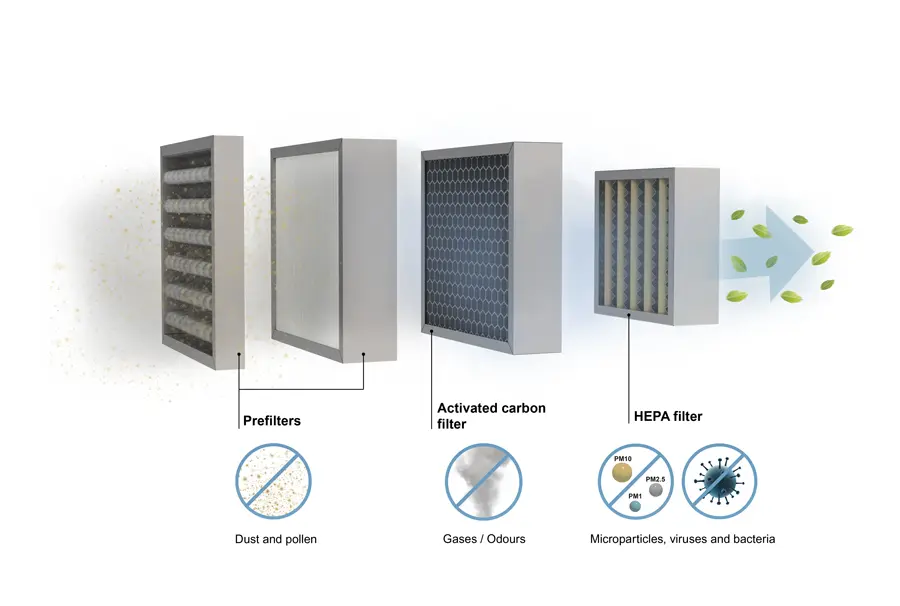
What Makes a True HEPA Filter Different From Regular Options
Here’s the deal. A true HEPA product meets strict government standards for particle capture. Regular options might catch larger dust bunnies, but that’s about it. I’ve tested both types in my work, and the difference is night and day. True products must capture 99.97% of particles down to a specific size.
Standard air cleaning products often use looser materials. They let smaller irritants pass right through. When clients ask me why their allergies persist, this is usually why. Their system simply cannot trap the tiny stuff causing problems. A genuine HEPA filter does the heavy lifting that cheaper options cannot handle.
The Science Behind How Your HEPA Filter Captures Particles
Let me explain the magic happening inside these systems. Your HEPA filter uses dense, randomly arranged fibers. Particles don’t just get blocked like a screen door stops bugs. Instead, three mechanisms work together to capture contaminants.
First, larger particles crash directly into fibers through interception. Second, medium particles follow air currents but get snagged anyway. Third, the smallest particles move erratically and bump into fibers randomly. This is called diffusion, and it’s surprisingly effective. I always tell people it’s like a maze that particles cannot escape. The combination makes your hepa filter incredibly efficient at trapping irritants.
Understanding the 0.3 Micron Standard in Air Filtration
Why do manufacturers focus on 0.3 micron particles specifically? Great question. This size represents the hardest particles to catch, oddly enough. Smaller particles move more erratically and get trapped by diffusion. Larger particles are easier to intercept directly. But 0.3 microns? They slip through both methods more easily.
Air filtration standards test at this size for good reason. If a HEPA filter catches 99.97% of these tricky particles, it handles everything else better. Think of it as testing in the worst-case scenario. When you see this specification, you know the product performs where it counts most.
Types of Air Purifiers and Their Indoor Air Quality Benefits
Not every air purifier works the same way. Some use hepa filter technology combined with other methods. You’ll find units designed for single rooms or whole-house systems. Portable options work great for bedrooms and offices. Central systems connect to your existing HVAC setup.
Each type impacts indoor air quality differently based on room size. I’ve installed countless systems over the years. Smaller portable units excel in spaces under 500 square feet. Whole-house systems make sense for comprehensive coverage. HEPA air purifiers come in various price ranges, too. Matching the right system to your space matters tremendously for results.
Health Benefits of Clean Air Systems for Your Home
Cleaner indoor air brings real health advantages. Here’s what I’ve seen help my clients the most:
- Reduced allergy symptoms from trapped pollen and dust
- Fewer asthma triggers are circulating through rooms
- Less pet dander affects sensitive family members
- Decreased mold spore exposure during humid seasons
- Better sleep quality from breathing cleaner air
These benefits compound over time with consistent use. A quality hepa filter removes the invisible particles causing problems. Many clients report noticeable improvements within the first week. Your respiratory system thanks you when it doesn’t fight airborne irritants constantly.
Why Genuine HEPA Products Outperform HEPA-Style Options
Now it’s time to really clean the lint out of there. A cleaning kit is your best friend here. These kits come with flexible brushes that reach deep into the ductwork. Attach the brush to a drill for easier rotation. Push it through the entire length of the vent.
Work slowly and pull the brush back frequently. You’ll be surprised how much debris comes out. After brushing, vacuum everything thoroughly. Pay special attention to the connection points where lint loves to accumulate. When your dryer vent is blocked this badly, it might take several passes to get it completely clear.
Activated Carbon and HEPA Filter Combinations for Air Purification
Many modern air purification systems combine technologies. Activated carbon handles odors and gases that particles cannot address. Your hepa filter catches physical contaminants while carbon absorbs chemicals. Together, they create comprehensive air cleaning coverage.
I recommend combination units for homes with pets or smokers. The carbon layer tackles smells before they spread. Meanwhile, the HEPA filter traps dander and smoke particles. This dual approach covers more bases than either technology alone. Air purification becomes much more effective when they work together.
When to Replace Your HEPA Filter Media
Cleaning once won’t solve the problem forever. Regular maintenance keeps your dryer vent clear and your home safe. I recommend cleaning the full vent system at least once a year. If you do lots of laundry, every six months is better.
Between deep cleanings, empty the lint trap after every single load. This simple habit dramatically reduces buildup in the vent. Also, avoid using sheets excessively. They leave a residue that traps more lint over time. Keep the area around your dryer clean, too. Dust and debris near the machine can get sucked into the system.
Choosing the Right Air Cleaner for Cleaner Indoor Air
So what should you actually buy? Consider your specific needs first. Room size determines the capacity you need from an air cleaner. Check the CADR rating, which measures how quickly units clean the air. Higher numbers mean faster particle removal for your space.
For cleaner indoor air throughout your home, match products to room sizes appropriately. Don’t forget ongoing costs like replacement media and energy usage. A hepa filter system represents a long-term investment in your family’s health. Choose quality over flashy features that don’t improve performance. Your lungs will appreciate the thoughtful decision for years ahead.
Frequently Asked Questions
Q: How long do HEPA filters typically last before needing replacement?
A: Most products last six months to two years with regular use. Factors like air quality, pets, and usage frequency affect lifespan. Check your manufacturer’s recommendations for specific guidance. Homes with more pollutants need more frequent replacements. I suggest visual inspections every few months to monitor buildup levels accurately.
Q: Can HEPA filters remove viruses and bacteria from the air?
A: Yes, these systems capture many airborne pathogens effectively. Most bacteria and virus-carrying droplets fall within the capture range. However, they work best combined with proper ventilation practices. No single product eliminates all health risks completely. Consider them an important layer in your overall indoor health strategy.
Q: Are HEPA air purifiers noisy during operation?
A: Noise levels vary significantly between models and speed settings. Lower fan speeds produce quieter operation suitable for bedrooms. Higher speeds clean faster but generate more sound. Look for decibel ratings when comparing units. Many modern systems operate quietly enough for sleeping without disturbance.
Q: Do HEPA filters help with cigarette smoke and cooking odors?
A: They capture smoke particles effectively, but odors require different technology. Combining with activated carbon addresses both smoke and smells. Particle capture alone won’t eliminate lingering odors in your space. I recommend combination units for homes dealing with persistent smell issues.
Q: How much electricity do HEPA air purifiers consume?
A: Most portable units use 50 to 100 watts on higher settings. That’s comparable to a standard light bulb running continuously. Energy-efficient models consume even less during operation. Annual costs typically range from $30 to $80, depending on usage patterns and local rates.
Q: Should I run my HEPA air purifier constantly or periodically?
A: Continuous operation provides the best air quality results overall. These systems work progressively, constantly removing new particles entering your space. Running periodically allows contaminants to accumulate between cycles. I keep mine running 24/7 on lower settings for consistent performance.